Why Flexibility Is My Secret Weapon for Staying Healthy
You probably think flexibility is just about touching your toes or doing yoga poses, but it’s way more than that. I used to ignore it—until I started feeling stiff, tired, and more prone to little injuries. Turns out, staying limber isn’t just about movement; it’s a game-changer for long-term health. Over time, I’ve built a simple, consistent routine that’s made a noticeable difference. Let me walk you through how flexibility quietly supports your body’s defense system and why it deserves a real spot in your daily life.
The Hidden Role of Flexibility in Daily Health
Flexibility is often misunderstood as merely the ability to stretch or perform advanced poses, but its true value lies in how it supports everyday function. At its core, flexibility refers to the range of motion across your joints, the elasticity of your muscles, and the resilience of your connective tissues like tendons and ligaments. When these systems work well, your body moves efficiently, responds to stress with ease, and recovers faster from physical demands. However, when flexibility declines, even routine actions—like bending to tie your shoes, reaching for a high shelf, or turning to check traffic—can become awkward or painful.
Many people don’t realize they’ve lost flexibility until discomfort sets in. Stiffness in the morning, aching hips after sitting too long, or that twinge in your lower back when lifting groceries—these are early signals that your body’s mobility is compromised. Over time, reduced flexibility contributes to poor posture, which places undue strain on the spine and can lead to chronic pain. It also increases the risk of injury, especially during sudden movements. For example, a simple misstep on uneven ground can turn into a sprained ankle if your ankle joints lack the necessary range of motion to stabilize the fall.
The consequences extend beyond physical discomfort. Limited mobility can quietly erode independence, especially as we age. Tasks that once felt effortless—carrying laundry upstairs, gardening, or playing with grandchildren—may require more effort or become off-limits altogether. Yet, flexibility remains one of the most overlooked aspects of health, often taking a backseat to more visible goals like weight loss or muscle gain. In reality, it’s a foundational component of physical well-being, just as essential as strength or endurance, and far more integrated into daily life than many realize.
Why Your Body Needs Flexibility to Prevent Disease
Beyond improving movement, flexibility plays a subtle but powerful role in preventing chronic health conditions. When muscles and joints are tight, circulation can suffer. Restricted blood flow limits the delivery of oxygen and nutrients to tissues and slows the removal of metabolic waste, creating an environment where inflammation can thrive. Chronic inflammation is now recognized as a key contributor to a wide range of diseases, including heart disease, type 2 diabetes, and arthritis. By maintaining good flexibility, you support healthier circulation and reduce the body’s inflammatory load.
Additionally, stiffness in the musculoskeletal system can trigger a cascade of metabolic and postural issues. For instance, tight hip flexors—common among those who sit for long hours—can pull the pelvis forward, leading to an exaggerated lower back curve known as anterior pelvic tilt. This misalignment increases pressure on the lumbar spine and is strongly linked to chronic lower back pain, one of the leading causes of disability worldwide. Similarly, limited shoulder mobility can contribute to neck strain and headaches due to compensatory movements in the upper body.
Research supports the protective benefits of flexibility. A study published in the American Journal of Physiology found that individuals with greater flexibility, particularly in the trunk and legs, tended to have better arterial elasticity, a marker of cardiovascular health. Another analysis in the Journal of Aging and Physical Activity showed that older adults who engaged in regular stretching exercises experienced fewer musculoskeletal disorders and reported higher levels of physical function. These findings suggest that flexibility isn’t just about movement—it’s a window into overall physiological resilience. By treating it as a preventive measure, not just a recovery tool, you give your body a better chance to stay strong and healthy for years to come.
Breaking the Myth: Flexibility Isn’t Just for Athletes
There’s a common misconception that flexibility is only important for gymnasts, dancers, or elite athletes. In reality, it’s just as crucial—if not more so—for the average person, especially those with sedentary lifestyles. Sitting for prolonged periods, whether at a desk, in a car, or on the couch, causes muscles to shorten and joints to stiffen. The hip flexors, hamstrings, and chest muscles are particularly vulnerable, leading to a hunched posture and reduced mobility over time. Unlike athletes who move their bodies through a wide range of motions, many adults rarely challenge their flexibility, allowing stiffness to creep in unnoticed.
Consider the daily routines of a typical office worker: hours of typing with shoulders rounded, neck craning forward, and legs bent at 90 degrees. Without counterbalancing movement, these positions become the body’s new normal. The same applies to parents who spend their days lifting children, bending over strollers, or kneeling on the floor. These repetitive motions, while not intense, can create muscular imbalances if not paired with stretching and mobility work. The result? A body that feels increasingly rigid, fatigued, and less capable of handling everyday physical tasks.
The good news is that flexibility training is accessible to everyone, regardless of fitness level or age. You don’t need to perform splits or advanced yoga poses to benefit. Simple, consistent movements—like gently stretching your hamstrings after standing up from a chair or rolling your shoulders during a phone call—can make a meaningful difference. The goal isn’t to achieve extreme ranges of motion but to maintain what you have and prevent further loss. By reframing flexibility as a daily necessity rather than a niche fitness pursuit, you empower yourself to move with greater ease and comfort throughout life.
Building a Systematic Flexibility Routine (That Actually Fits Your Life)
One of the biggest barriers to improving flexibility is the belief that it requires large blocks of time or intense effort. In truth, consistency matters far more than intensity. A five-minute stretch every day is more effective than an hour-long session once a week. The key is to build a routine that fits seamlessly into your existing schedule, making it sustainable in the long run. Start by identifying natural transition points in your day—moments when you’re already shifting from one activity to another—such as waking up, finishing work, or winding down before bed.
A balanced flexibility routine includes three main components: dynamic stretching, static stretching, and mobility work. Dynamic stretches—gentle, movement-based exercises like leg swings or arm circles—are best done in the morning or before physical activity to prepare the body for motion. Static stretching, where you hold a position for 20 to 30 seconds, is ideal after exercise or in the evening to release tension. Mobility work, which focuses on joint movement and control, can be done at any time and is especially helpful for areas prone to stiffness, like the hips, shoulders, and spine.
Aim for three to four dedicated stretching sessions per week, but don’t underestimate the power of micro-movements throughout the day. For example, stand up and stretch your arms overhead every hour if you work at a desk. Use commercial breaks during TV time to stretch your back or roll out tight muscles with a foam roller. These small habits add up, creating a cumulative effect that supports long-term mobility. The most effective routines are not perfect—they’re persistent. By designing a plan that works with your lifestyle, not against it, you increase the likelihood of sticking with it for good.
What Works: Simple, Science-Backed Methods Anyone Can Start Today
Not all stretching techniques are created equal. To get real results, focus on methods proven by science to improve tissue quality, enhance circulation, and increase range of motion. Three of the most effective and accessible techniques are static stretching, foam rolling, and joint mobility drills. Each plays a unique role in maintaining and improving flexibility, and all can be done at home with little to no equipment.
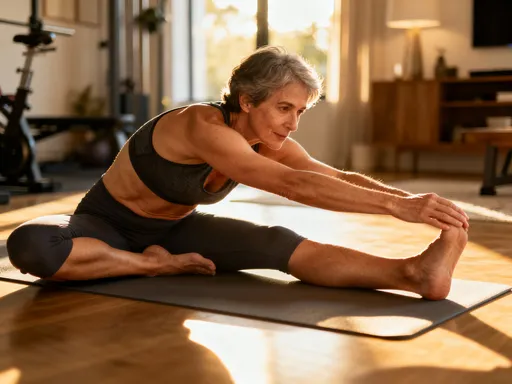
Static stretching involves holding a stretch in a comfortable position for 20 to 30 seconds, allowing the muscle to gradually relax and lengthen. This method is particularly effective for improving muscle elasticity and reducing post-exercise soreness. A simple example is the seated hamstring stretch: sit on the floor with one leg extended, the other bent, and gently reach toward your toes. Keep your back straight and avoid bouncing. Over time, you’ll notice increased ease in forward bends and daily movements like tying shoes.
Foam rolling, also known as self-myofascial release, helps break up tightness in the fascia—the connective tissue surrounding muscles. By applying gentle pressure to areas like the calves, thighs, or back, you stimulate blood flow and encourage the tissue to release tension. Roll slowly over each area, pausing on spots that feel particularly tight. This technique is especially useful for those with desk-related stiffness or soreness from light physical activity.
Joint mobility drills focus on moving joints through their full range of motion in a controlled way. The cat-cow stretch, for example, gently alternates between arching and rounding the spine, improving spinal flexibility and relieving back tension. Shoulder rolls and ankle circles are other simple yet effective movements. These drills not only enhance mobility but also improve proprioception—the body’s awareness of its position in space—which supports balance and coordination. By incorporating these three techniques into your routine, you create a well-rounded approach to flexibility that supports both immediate comfort and long-term health.
How Flexibility Supports Long-Term Mobility and Independence
As we age, maintaining mobility becomes one of the most important factors in preserving independence and quality of life. Flexibility plays a critical role in this process by supporting balance, coordination, and joint health. Stiff joints and tight muscles impair your ability to react quickly to changes in terrain, increasing the risk of falls—a leading cause of injury among older adults. By keeping your body supple, you enhance your ability to catch yourself during a stumble or adjust your posture when reaching for something unexpectedly.
Moreover, flexibility works hand in hand with strength and cardiovascular fitness. Strong muscles are only effective if they can move through their full range of motion. A person with strong legs but tight hip flexors, for example, may struggle with walking efficiency or climbing stairs. Similarly, good heart health means little if joint stiffness prevents you from engaging in physical activity. Flexibility ensures that your strength and endurance can be fully utilized in real-world situations.
Think of flexibility as an investment in your future self. The habits you build today—stretching your hamstrings, rolling your shoulders, moving your spine—compound over time. Decades from now, those small efforts could mean the difference between needing assistance with daily tasks and moving freely on your own. It’s not about looking flexible; it’s about staying capable. By prioritizing flexibility now, you’re not just preventing pain—you’re protecting your ability to live actively and independently for as long as possible.
Making It Stick: Mindset, Motivation, and Realistic Expectations
One of the most common reasons people give up on flexibility training is impatience. Unlike strength or cardio, the results aren’t always visible or immediate. You won’t see muscle definition or a lower number on the scale. Instead, progress shows up in subtle ways: less stiffness in the morning, easier movement during daily tasks, or a greater sense of comfort in your body. That’s why shifting your mindset is crucial. Focus on how you feel, not how far you can stretch. Celebrate small wins, like being able to touch your knees or noticing less tension in your neck after a long day.
Another obstacle is the belief that you’re “too stiff to start.” But flexibility isn’t a trait you’re born with—it’s a skill you develop. Everyone, no matter their age or current condition, can improve with consistent effort. The key is to begin where you are and listen to your body. Never push into pain; stretching should feel like a gentle pull, not discomfort. Over time, your tissues will adapt, and your range of motion will gradually increase.
To stay motivated, integrate stretching into habits you already have. Pair it with your morning coffee, your evening TV time, or your post-dinner walk. Track your progress not by benchmarks but by daily comfort and ease of movement. And remember, missing a day isn’t failure—it’s part of the process. What matters is returning to the routine without guilt. Flexibility is not about perfection; it’s about showing up for your body, day after day. When you adopt this mindset, the practice becomes less of a chore and more of a quiet act of self-care—one that pays dividends for years to come.
Flexibility isn’t flashy, but it’s foundational. It’s not about achieving perfect poses—it’s about keeping your body resilient, responsive, and ready for life. By making it a consistent part of your routine, you’re not just preventing injury; you’re investing in a future where you can move freely, comfortably, and confidently. Start small, stay steady, and let your body thank you later.