How I Protected My Savings While Paying for Art Classes — A Beginner’s Real Talk
So, you want to grow as an artist but don’t want to drain your bank account or take crazy financial risks? Same here. I once blew through months of savings on art training, only to realize I hadn’t protected my assets at all. That’s when I shifted focus — not just on learning, but on preserving what I already had. This is my story of balancing passion with financial sense, and how I made sure my wallet didn’t pay the full price for my creativity.
The Hidden Cost of Creative Dreams
When you’re passionate about something, it’s easy to believe every expense is justified. I loved drawing and wanted to improve, so I signed up for an intensive online illustration course priced at $1,200. At the time, it felt like an investment — and technically, it was. But what I didn’t realize then was that I was making that investment without a financial safety net. I hadn’t built up emergency savings, I hadn’t tracked my monthly cash flow, and I certainly hadn’t considered what would happen if something unexpected came up — like a car repair or a medical bill. The cost of the course wasn’t just the price tag; it was the increased financial fragility that followed.
After that first big purchase, I kept going. I bought a high-end graphics tablet, subscribed to premium design software, and even paid $500 for a private critique session with a well-known digital painter. Each decision felt exciting, even empowering. I told myself I was serious about my craft. But looking back, I was operating on emotion, not strategy. I was treating my savings like a bottomless well, and every splash I made brought me closer to dry ground. By the end of six months, I had spent over $3,000 — nearly half of my annual discretionary income — and while I had learned some valuable skills, I also had zero financial cushion. That’s when reality hit: passion doesn’t protect your bank account.
What I had failed to understand was that creative growth and financial stability don’t have to be at odds. In fact, one can support the other when approached with intention. The real cost of pursuing art wasn’t the money spent on classes — it was the lack of planning around that spending. I had treated asset preservation as an afterthought, something to deal with “later.” But in personal finance, “later” often comes too late. The turning point came when I missed a utility payment because my account was overdrawn after another course purchase. That small mistake triggered late fees, stress, and a wake-up call: if I wanted to keep learning, I needed to stop treating my finances like an afterthought.
Why Asset Preservation Beats Chasing Returns
After my financial stumble, I started reading more about money management, especially for people funding their own education. One concept kept appearing: capital preservation. At first, it sounded dull — not as exciting as “doubling your money in six months” or “passive income streams.” But the more I learned, the more I realized it was exactly what I needed. For someone like me, who wasn’t earning a high income or receiving financial aid, protecting what I already had was more valuable than chasing uncertain gains.
I made the mistake early on of trying to “earn back” what I spent on art training. I joined a side hustle promising high returns — a print-on-demand business where I’d design artwork and earn royalties. The pitch sounded perfect: use my new skills to generate income while building a portfolio. But the startup costs added up — $300 for mockup tools, $200 for marketing templates, and another $150 for a “premium” listing boost. I justified it as an investment, but within three months, the project fizzled out. I earned less than $40 in total sales. The experience taught me a hard lesson: when your financial base is already thin, risky ventures don’t lift you up — they pull you down.
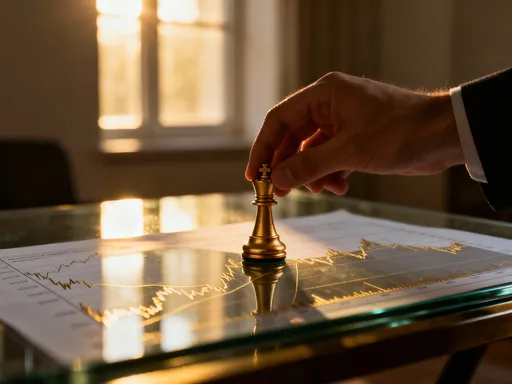
Financial advisors often say that the first goal of any investor should be capital preservation, especially for beginners. This doesn’t mean avoiding all risk, but rather ensuring that your essential funds — those needed for education, emergencies, and basic stability — aren’t exposed to high volatility. For art students and self-directed learners, this principle is crucial. Unlike traditional students who may have loans or family support, independent learners are often using their own hard-earned money. Losing even a portion of that can derail months of progress. I realized I didn’t need a get-rich-quick scheme; I needed peace of mind. And that came not from chasing returns, but from building a foundation where my core savings were safe from market swings, bad bets, and impulsive decisions.
Once I shifted my mindset from “How can I make more?” to “How can I lose less?”, everything changed. I stopped looking for shortcuts and started valuing consistency. I began to see my savings not as a pool to be drained, but as a reservoir to be protected and replenished. This wasn’t about limiting my dreams — it was about making them sustainable.
Building a Financial Safety Net for Artistic Goals
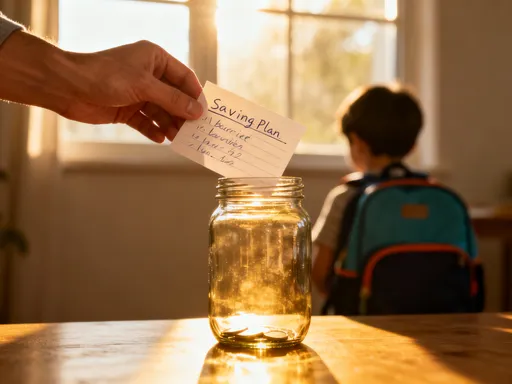
The first practical step I took was creating a dedicated education fund. I opened a separate high-yield savings account — nothing fancy, just a no-fee account with my local credit union — and labeled it “Art Learning Fund.” The idea was simple: any money going toward classes, tools, or mentorship would come from this account, not my main checking account. This separation made a surprising psychological difference. When I saw the balance in that account, I felt more accountable. I wasn’t just spending money; I was allocating it with purpose.
I started small, transferring just $50 a month into the fund. It didn’t seem like much, but over six months, it added up to $300 — enough to cover a modest online course without touching my emergency savings. I also set a rule: I wouldn’t enroll in any program unless at least 70% of the cost was already in the fund. This forced me to plan ahead and avoid last-minute, high-pressure purchases. For example, when a popular watercolor workshop opened registration at $450, I didn’t sign up immediately. Instead, I calculated how long it would take to save that amount at my current rate — about nine months. I put the course on my calendar and continued saving. When the time came, I paid in full without stress.
To keep the fund safe, I avoided putting it into stocks, crypto, or other volatile assets. While those might offer higher returns, they also carry the risk of loss — and I couldn’t afford to lose even 10% of my education budget. Instead, I let the money sit in a federally insured savings account earning modest interest. Some might call that “leaving money on the table,” but I saw it differently: I was paying for stability, not returns. That stability gave me something priceless — the ability to make decisions based on what I truly needed, not what I could barely afford.
Another key move was aligning my learning goals with my financial timeline. Instead of jumping at every new course, I began to think in terms of “financial readiness.” Before committing to anything, I asked: Do I have the funds set aside? Will this purchase disrupt my other obligations? Can I pause or cancel without penalty? These questions helped me stay grounded. Over time, my safety net grew stronger, and with it, my confidence. I wasn’t just saving money — I was building financial resilience.
Smart Spending: How to Pay for Training Without the Regret
One of the biggest shifts in my approach was learning to evaluate cost beyond the sticker price. I used to compare art courses the way I’d compare grocery items — lowest price wins. But I soon realized that the cheapest option wasn’t always the most affordable in the long run. I once took a $99 drawing course that promised “pro-level results in 30 days.” It was poorly structured, the instructor rarely gave feedback, and I ended up needing to retake similar material in a more expensive class later. In the end, I spent more time and money than if I’d just started with a better program.
On the other hand, a $600 figure drawing course I paid in three installments turned out to be one of my best financial decisions. The payment plan matched my cash flow — I paid $200 upfront, $200 after four weeks, and the final $200 at the end. This structure reduced the immediate burden and gave me time to assess the course’s value as I progressed. If I hadn’t been satisfied, I could have stopped after the first payment and only lost a portion. As it turned out, the course was excellent, and spreading the cost made it feel manageable.
I also began to consider opportunity cost — what else could I do with that money? If I spent $400 on a single workshop, that was $400 I couldn’t use for materials, healthcare, or unexpected repairs. I started asking myself: Will this course significantly improve my skills? Is there a free or lower-cost alternative that covers the same material? Can I get similar feedback from a local art group or online community? These questions helped me prioritize spending on high-impact learning rather than emotional purchases.
Another smart strategy was timing. I noticed that many art educators offered enrollment windows — open for a few days each quarter. Instead of rushing to sign up the moment registration opened, I waited. I watched for discounts, early-bird pricing, or bundled offers. I even reached out to instructors to ask if they offered payment plans or scholarship spots. To my surprise, several said yes. One teacher offered a 15% discount for paying in full, while another allowed students to pay in five interest-free installments. These small negotiations saved me hundreds over time and made quality education more accessible.
Risk Control: Avoiding the Traps Beginners Fall Into
One of the most dangerous moments in my journey came when I almost joined a “guaranteed success” art mentorship program. The website was sleek, the testimonials were glowing, and the instructor claimed that 95% of students landed illustration jobs within six months. The program cost $2,500 — a huge sum for me — but they offered a payment plan. I was ready to sign up until I did some digging. I searched online forums and found multiple complaints: students who paid but never received promised critiques, others who completed the course and still couldn’t find work, and a few who said the instructor had disappeared after collecting fees.
This was a classic case of emotional manipulation — using aspirational outcomes to justify high costs. I realized I had been seduced by the promise of a quick result, not the actual quality of the program. That experience taught me to develop filters for spotting red flags. Now, before committing to any course, I check for transparency: Are the learning outcomes clearly defined? Is the curriculum detailed? Can I see sample lessons or talk to past students? If the answer is no, I walk away.
Another trap I avoided was the “all-in” mentality — the belief that I had to spend everything to be taken seriously. I saw other artists buying the most expensive software, attending every conference, and posting about their “investment in themselves.” At first, I felt behind. But I reminded myself that financial health isn’t about appearances — it’s about sustainability. I didn’t need the latest tools to learn; I needed consistent practice and reliable instruction. By focusing on value over visibility, I protected myself from lifestyle inflation disguised as professional development.
I also learned to recognize emotional spending — buying a course because I felt guilty for not practicing, or signing up for a workshop to “restart” my progress. These purchases often came after a bad day or a creative slump. Now, I have a 48-hour rule: if I see a course I want, I wait two days before deciding. Most of the time, the urgency fades, and I can assess the decision more clearly. This simple habit has saved me hundreds and helped me spend with intention.
Balancing Passion and Practicality: A Realistic Mindset Shift
The most transformative change wasn’t in my budget — it was in my thinking. I used to see financial caution as the enemy of creativity, as if protecting my money meant limiting my growth. But over time, I came to see it differently. I began to view budgeting, saving, and risk control not as restrictions, but as enablers. When I knew my core savings were safe, I felt freer to experiment, to take reasonable risks, and to keep learning — even during months when my side income dipped.
I stopped feeling guilty about saying no to expensive programs. Instead, I felt proud of making thoughtful choices. I started celebrating small wins: completing a free course, finishing a sketchbook, or sticking to my monthly savings goal. These moments didn’t make headlines, but they built confidence. I wasn’t just becoming a better artist — I was becoming a more responsible learner.
This mindset shift also improved my relationship with time. Before, I felt rushed — like I had to master everything quickly before my money ran out. Now, I embrace a slower, more sustainable pace. I remind myself that artistic growth is a marathon, not a sprint. Protecting my finances doesn’t slow me down; it keeps me in the race. I can pause, reflect, and return without fear of financial collapse. That sense of security has been more valuable than any single course I’ve taken.
Perhaps the greatest freedom I’ve gained is the ability to enjoy the process. I’m no longer obsessed with outcomes — landing a client, going viral, or selling artwork. I create because I love it, and I learn because I’m curious. My financial habits support that joy instead of threatening it. That, more than any skill, has changed my journey.
Putting It All Together: My Simple Framework for Sustainable Learning
Over the past two years, I’ve built a system that works for me — one that balances creativity with financial responsibility. It’s not complicated, and it doesn’t require a high income or financial expertise. It starts with a clear goal: protect the foundation so the dream can grow. Here’s how I structure it.
First, I maintain a dedicated education fund in a separate, low-risk savings account. I contribute $50 to $100 per month, depending on my income that month. I don’t touch this money for anything else. Before enrolling in any course, I ensure at least 70% of the cost is already saved. This eliminates impulse buys and ensures I’m financially ready.
Second, I evaluate every learning opportunity using three questions: Does it fit my current skill gap? Is the curriculum transparent and well-structured? Can I afford it without disrupting my essential expenses? If the answer to any is no, I wait or look for alternatives. I also prioritize programs with flexible payment options or money-back guarantees, which reduce financial risk.
Third, I practice disciplined timing. I don’t rush into enrollments. I watch for open registration periods, compare pricing, and consider waiting for discounts. I’ve learned that most quality educators offer payment plans — and asking never hurts. This approach has helped me access high-value training without overextending.
Finally, I review my financial and creative progress every quarter. I look at what I’ve learned, how much I’ve spent, and how I’m feeling — stressed or confident? This reflection helps me adjust my plan and stay aligned with both my artistic and financial goals. It’s not about perfection; it’s about progress.
This framework has allowed me to take six courses, upgrade my tools gradually, and even start selling a few prints — all without debt or financial panic. I’m still learning, still saving, and still protecting what matters most. My savings aren’t just numbers in an account; they’re proof that I can pursue my passion without sacrificing my peace of mind. And that, to me, is the real return on investment.